Stop collecting participant documents through programme inboxes.
Request passport copies, eligibility evidence, signed consent forms, and supporting records from participants through one controlled upload path instead of email attachments and shared folders.

01
One record for each participant, cohort, or enrolment stage.
4
Core stages: request, submit, review, and complete.
0
Participant evidence needs to sit in a caseworker inbox or a personal drive.
Participant document collection has to work for people who are not office workers.
Participants may be applicants, learners, service users, or beneficiaries. Many submit a passport copy or proof of eligibility from a phone, often once, often under time pressure, and often with help from a caseworker.
Programme teams need those documents to arrive complete and attached to the right person, while funders later expect the organization to show what was collected and why.
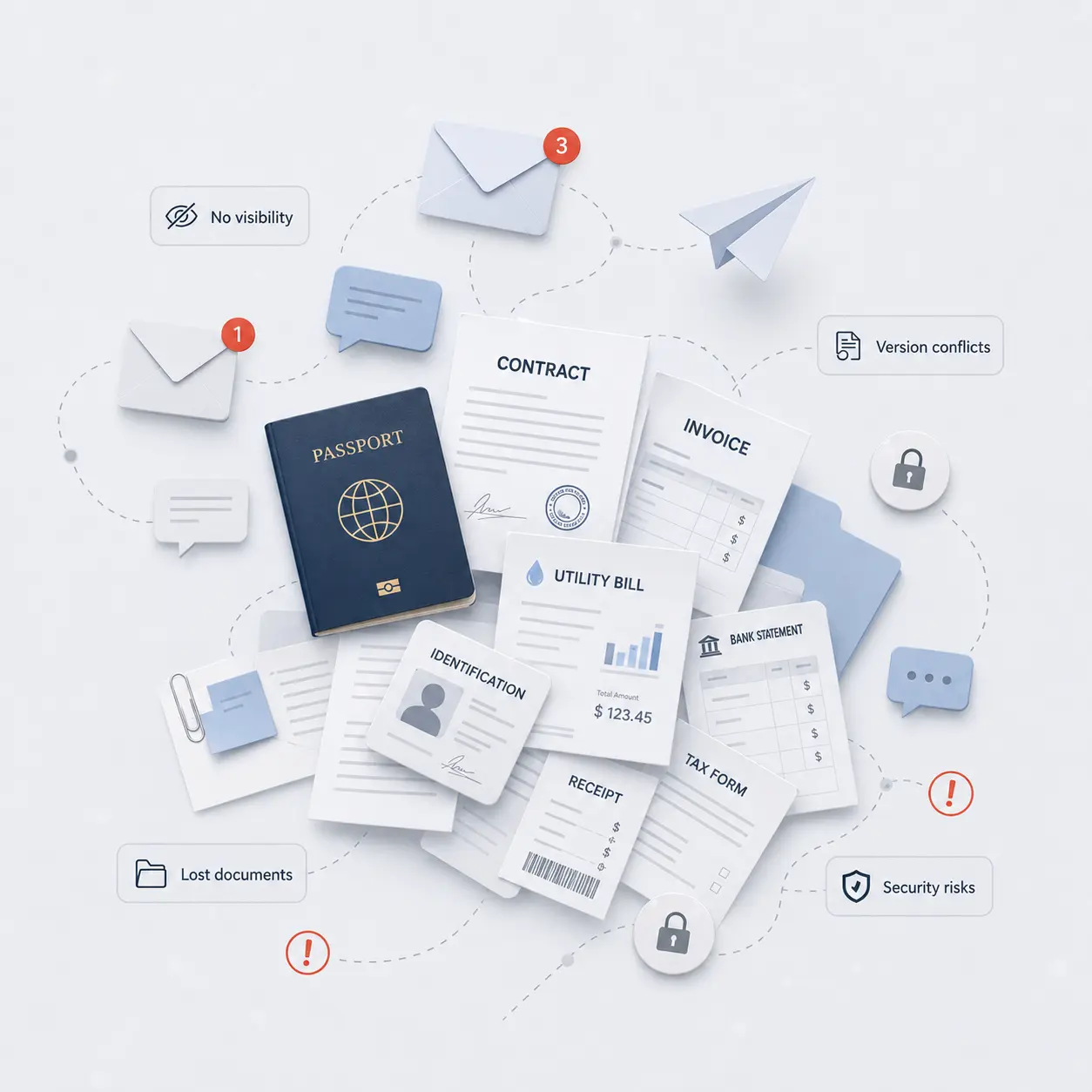
Programme teams need participant evidence connected to enrolment, review, and assurance.
Spreads passport images across caseworker inboxes with no reliable view of who still owes what.
Convenient for participants, but the file lands on a staff device rather than in the programme record.
Hold the documents but rarely show which enrolment request each file was meant to satisfy.
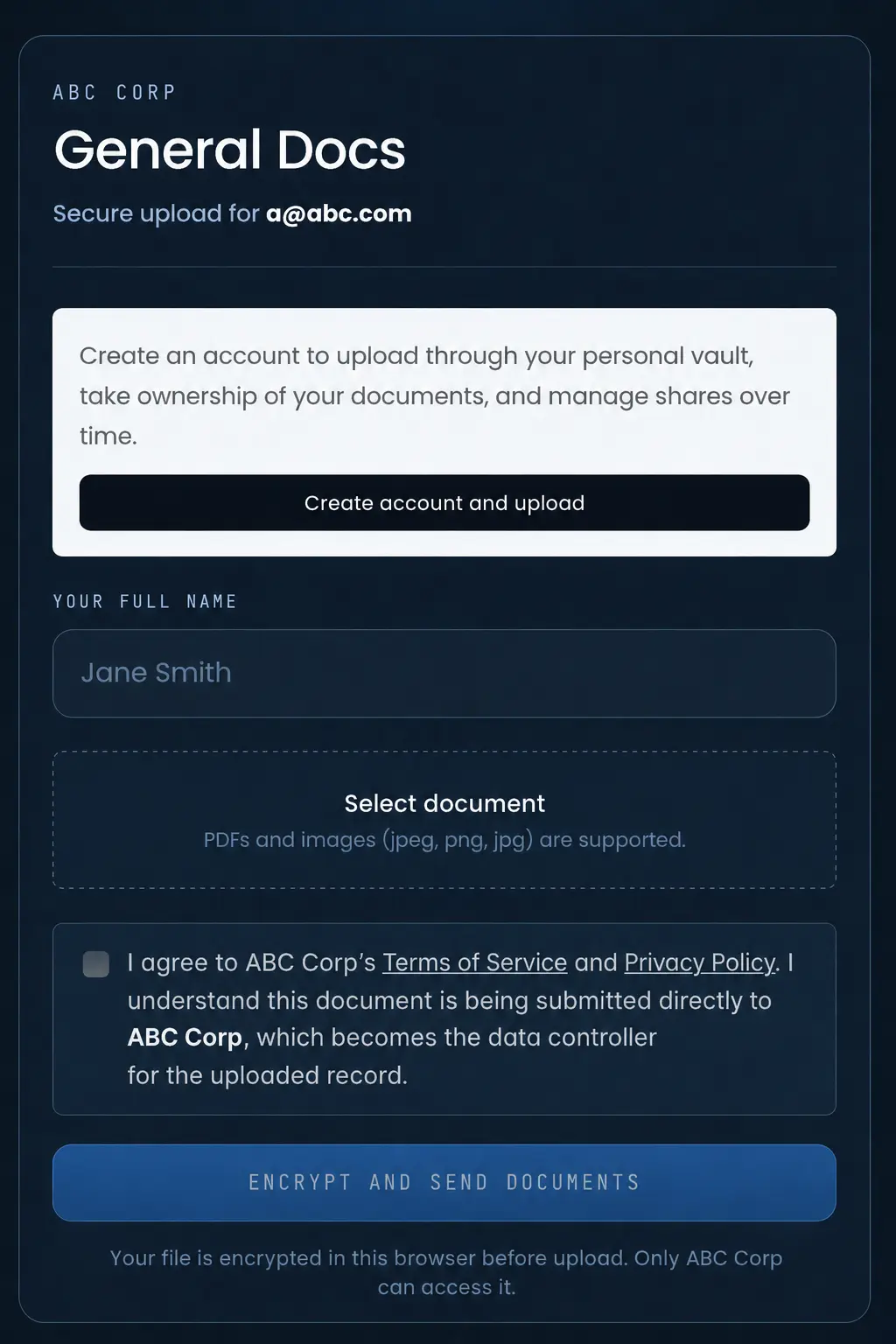
Participant document collection for enrolment, eligibility checks, and funder assurance.
Define the records each participant, cohort, or programme stage requires.
Give participants a mobile-friendly upload path that does not require a file sharing account.
Give programme staff one custody record for evidence status and review decisions.
Apply access controls, audit logging, retention schedules, and deletion discipline.
The controls programme teams need when a funder asks what was collected.
Audit trail
Record what was requested, when it arrived, who accessed it, and how it was handled.
Scoped access
Limit passport copies and eligibility evidence to the staff responsible for that participant.
Retention schedules
Hold participant records for the period the funding agreement requires, then delete deliberately.
Participant confidence
Give people a credible route for sharing identity documents with a service they may not know well.
Designed to support programme assurance without replacing eligibility decisions.
Participant workflows may be shaped by funder agreements, UK GDPR obligations, safeguarding policy, and internal record-keeping standards.
CVOR does not assess eligibility, verify identity, or decide what a programme must collect. It provides governed document collection and custody so teams can evidence their handling of participant records.
Participant document collection questions
Can participants upload passport copies to our account?
Yes. CVOR can let your organization issue a controlled request so participants upload passport copies or other evidence directly into your governed workspace.
Is this suitable for charities and funded programmes?
Yes. CVOR is designed for organizations that need to request, receive, retain, and audit sensitive documents from people outside the organization.
Does CVOR decide what participant documents we should collect?
No. Your organization defines the required records, purpose, lawful basis, and retention policy. CVOR provides the governed collection and custody workflow.
Move participant document collection into governed custody.
Sales-led onboarding. We assess document types, reviewer roles, access boundaries, and retention requirements before onboarding.